Ultimate Interstates:Corridors 422 and 222: Difference between revisions
No edit summary |
|||
| (3 intermediate revisions by the same user not shown) | |||
| Line 1: | Line 1: | ||
[[File:corridor422-222.png|thumb|upright|Corridor 422-222 Overview]] | [[File:corridor422-222.png|thumb|upright|Corridor 422-222 Overview]] | ||
'''Ultimate Interstate 422''' and '''Ultimate Interstate 222''' are proposed interstate auxiliary routes planned as part of a northern bypass loop in the Birmingham metropolitan area. The planned route traverses northward from the intersection of Interstate 20/59 and the Southern Bypass (I-459) traveling northward towards its parent route (I-22) connecting with that route via a 2 mile spur. From there the route would continue northeastward connecting to I-65 in the north of the metro area at a new interchange, then curving eastward and southeastward connecting to I-59 in the northeast of the metro area at a new interchange. | '''Ultimate Interstate 422''' and '''Ultimate Interstate 222''' are proposed interstate auxiliary routes planned as part of a northern bypass loop in the Birmingham metropolitan area known as the ''' Birmingham Northern Beltline''' and unsigned '''Alabama Route 959'''. The planned route traverses northward from the intersection of Interstate 20/59 and the Southern Bypass (I-459) traveling northward towards its parent route (I-22) connecting with that route via a 2 mile spur. From there the route would continue northeastward connecting to I-65 in the north of the metro area at a new interchange, then curving eastward and southeastward connecting to I-59 in the northeast of the metro area at a new interchange. | ||
===I-22 Interchange=== | ===I-22 Interchange Challenges=== | ||
Due to geometric and terrain constraints where Ultimate Interstate 422 crosses its parent route, it was determined that it was unfeasible to construct an interchange there, and the connection will instead be made via a 2 mile interstate spur (I-222) located about 2 miles to the east of this junction. Meaning that some traffic will have to negotiate a 6 mile backtrack loop just to connect from I-422 north to I-22 west. | Due to geometric and terrain constraints where Ultimate Interstate 422 crosses its parent route, it was determined that it was unfeasible to construct an interchange there, and the connection will instead be made via a 2 mile interstate spur (I-222) located about 2 miles to the east of this junction. Meaning that some traffic will have to negotiate a 6 mile backtrack loop just to connect from I-422 north to I-22 west. | ||
===Timeline and Funding=== | |||
The project is part of the Appalachian Development Highway System. The Northern Beltway, also known as '''Corridor X-1''', is the northern beltway component of the larger '''Corridor-X''' that eventually became Interstate 22. This section that is currently being planned as I-422 and I-222. The project is being planned in two main phases. The first phase connects I-65 and I-59 in the north and northeast. and the Second phase connects I-65 with I-22 and I-20/59 from the north to the southwest. | |||
The project was originally conceived in the 1960's but had never really entered into the long-range planning until later on. At that time Birmingham was a much smaller metropolitan area and the beltway would not have been needed at that time. The goal of this project was to complete a full beltway loop around Birmingham to compliment the I-459 southern beltway. Eventually planning and funding was secured to begin construction in 2014 on the initial segment between AL-79 and AL-75 in the north metro near Pinson, however funding quickly ran out and construction stalled for nearly a decade. With new influx of federal funding constuction resumed in 2024 and is nearing completion as of fall 2026 on this first 2-mile segment. And with this new funding planning and environmental permits for construction of a second 9.5 mile segment from Pinson west to US-31 with construction to follow soon thereafter. The full buildout of the project will take more than a decade to be completed with some estimates stating it may not be completed until 2048 and others not until 2060. | |||
The overall cost of the project is currently estimated to cost nearly 5.5 Billion dollars, making it the most expensive road project in Alabama and one of the most expensive in the country. Certainly with the long timeframe for this project, the cost could increase significantly if there are issues, delays, and further increases in material costs. With such a long buildout timeframe, terrain challenges, the potential for opposition, and environmental concerns, one might ask will the beltway ever be built to its full length; will it become a road to nowhere; or will it just connect I-65 to I-59 in the north and northeast. | |||
<gallery> | <gallery> | ||
| Line 15: | Line 22: | ||
File:example 422g.jpg|Landowners Along the Beltline | File:example 422g.jpg|Landowners Along the Beltline | ||
</gallery> | </gallery> | ||
===Environmental Concerns and Criticism=== | ===Environmental Concerns and Criticism=== | ||
| Line 32: | Line 32: | ||
==Indyroads Recommendation== | ==Indyroads Recommendation== | ||
The Northern Beltline is surely an ambitious project, but it is uncertain if it really is worth the cost. Potentially it may make more sense to look at a shorter beltway across the north between I-22 and I-59 instead and then connecting it to I-20 to the east at some point in the future. Another option is to move it further out to travel through Jasper instead and end in Tuscaloosa instead to make it more of a regional bypass instead of a metro bypass. This would allow traffic to move efficiently with less induced sprawl along the corridor with it being further out. Also 'no-development' zones and interchange spacing could be used to help protect the rural areas further out to help curtail the potential for sprawl. I am usually in favor of freeway projects especially in areas where congestion is a problem, but I am not as excited about this one. As for the need for the project, there is a need for a better connection from I-65 in the north to I-20/59 in the southwest. Currently all traffic making this move must negotiate the downtown interchange and travel along the congested 20-59 corridor which is one reason I would support this project. | The Northern Beltline is surely an ambitious project, but it is uncertain if it really is worth the cost. Potentially it may make more sense to look at a shorter beltway across the north between I-22 and I-59 instead and then connecting it to I-20 to the east at some point in the future. Another option is to move it further out to travel through Jasper instead and end in Tuscaloosa instead to make it more of a regional bypass instead of a metro bypass. This would allow traffic to move efficiently with less induced sprawl along the corridor with it being further out. Also 'no-development' zones and interchange spacing could be used to help protect the rural areas further out to help curtail the potential for sprawl. I am usually in favor of freeway projects especially in areas where congestion is a problem, but I am not as excited about this one. As for the need for the project, there is a need for a better connection from I-65 in the north to I-20/59 in the southwest. Currently all traffic making this move must negotiate the downtown interchange and travel along the congested 20-59 corridor which is one reason I would support this project. | ||
===Recommended Numbering=== | |||
Since the route favors I-59 and serves better as its bypass it makes more sense to number it accordingly as I-259, I-659, or I-859 instead since it loops back to its original alignment. The numbering would also complement well with existing I-459 differentiating it since it isn't a true 'loop' connecting at both ends. Indyroads recommends numbering it as I-859 fir that reason. | |||
[[Category:Ultimate Interstates]][[Category:Visions]][[Category:Southeastern US]] | [[Category:Ultimate Interstates]][[Category:Visions]][[Category:Southeastern US]] | ||
Latest revision as of 18:27, 29 August 2026

Ultimate Interstate 422 and Ultimate Interstate 222 are proposed interstate auxiliary routes planned as part of a northern bypass loop in the Birmingham metropolitan area known as the Birmingham Northern Beltline and unsigned Alabama Route 959. The planned route traverses northward from the intersection of Interstate 20/59 and the Southern Bypass (I-459) traveling northward towards its parent route (I-22) connecting with that route via a 2 mile spur. From there the route would continue northeastward connecting to I-65 in the north of the metro area at a new interchange, then curving eastward and southeastward connecting to I-59 in the northeast of the metro area at a new interchange.
I-22 Interchange Challenges
Due to geometric and terrain constraints where Ultimate Interstate 422 crosses its parent route, it was determined that it was unfeasible to construct an interchange there, and the connection will instead be made via a 2 mile interstate spur (I-222) located about 2 miles to the east of this junction. Meaning that some traffic will have to negotiate a 6 mile backtrack loop just to connect from I-422 north to I-22 west.
Timeline and Funding
The project is part of the Appalachian Development Highway System. The Northern Beltway, also known as Corridor X-1, is the northern beltway component of the larger Corridor-X that eventually became Interstate 22. This section that is currently being planned as I-422 and I-222. The project is being planned in two main phases. The first phase connects I-65 and I-59 in the north and northeast. and the Second phase connects I-65 with I-22 and I-20/59 from the north to the southwest.
The project was originally conceived in the 1960's but had never really entered into the long-range planning until later on. At that time Birmingham was a much smaller metropolitan area and the beltway would not have been needed at that time. The goal of this project was to complete a full beltway loop around Birmingham to compliment the I-459 southern beltway. Eventually planning and funding was secured to begin construction in 2014 on the initial segment between AL-79 and AL-75 in the north metro near Pinson, however funding quickly ran out and construction stalled for nearly a decade. With new influx of federal funding constuction resumed in 2024 and is nearing completion as of fall 2026 on this first 2-mile segment. And with this new funding planning and environmental permits for construction of a second 9.5 mile segment from Pinson west to US-31 with construction to follow soon thereafter. The full buildout of the project will take more than a decade to be completed with some estimates stating it may not be completed until 2048 and others not until 2060.
The overall cost of the project is currently estimated to cost nearly 5.5 Billion dollars, making it the most expensive road project in Alabama and one of the most expensive in the country. Certainly with the long timeframe for this project, the cost could increase significantly if there are issues, delays, and further increases in material costs. With such a long buildout timeframe, terrain challenges, the potential for opposition, and environmental concerns, one might ask will the beltway ever be built to its full length; will it become a road to nowhere; or will it just connect I-65 to I-59 in the north and northeast.
-
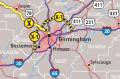 Initial Corridor X-1 Plan
 -
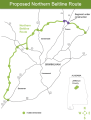 ALDOT Proposed Route
 -
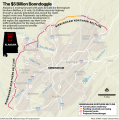 Proposed Route With Phases
 -
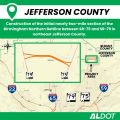 Current Section (Nearing Completion)
 -
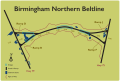 Current Section (Detailed)
 -
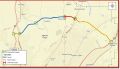 Northern Phase Construction Coming Soon
 -
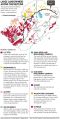 Landowners Along the Beltline


Environmental Concerns and Criticism
Proponents of the project say the highway will improve emergency response times, boost regional economic development, and create thousands of jobs. But critics have highlighted several concerns regarding environmental impacts and citing the usual arguments that the project will just create urban sprawl and induce demand. The environmental concerns have some merit in that in order to construct the project there will be several watersheds impacted along the route which could bring concerns about fish habitat and drinking water impacts. The project will also no doubt have an impact on wildlife and forest habitats since the planned route traverses a fairly hilly and densely forested area. Then there is the cost. Some critics balk at the massive cost of the project calling it a 'unnecessary boondoggle' and arguing that this money could be better spent elsewhere, especially in light of the cuts that were made to other ALDOT projects due to funding shortfalls. Then there is the consideration of those who stand to benefit from a large project like this being completed. Corporate landowners own large swaths of land in the area which would become much more desirable with freeway access, and lead to key development along the corridor. The largest landowner U.S. Steel has the most land and has a history of doing large scale residential and commercial land developments. Other major property owners also stand to potentially benefit similarly as property values increase along the corridor.
Perceived Purpose and Need
According to transportation planners and ALDOT, This corridor solves several transportation issues in that it provides a full beltway around the city connecting with the Southern Beltline to the southwest. However using this beltway benefits traffic mostly from the southwest to the northeast along the I20 and I-59 corridors providing bypasses for each. It also provides a releiver route for traffic heading along I-65 to and from the north into the metro area, as well as connecting to and from I-22 in the northwest. But for through traffic along I-65 passing north and south through the metro area the benefits are just not there. The beltline causes significant backtrack mileage if used and would not likely provide better relief than just staying on I-65 through the urban core.
Indyroads Recommendation
The Northern Beltline is surely an ambitious project, but it is uncertain if it really is worth the cost. Potentially it may make more sense to look at a shorter beltway across the north between I-22 and I-59 instead and then connecting it to I-20 to the east at some point in the future. Another option is to move it further out to travel through Jasper instead and end in Tuscaloosa instead to make it more of a regional bypass instead of a metro bypass. This would allow traffic to move efficiently with less induced sprawl along the corridor with it being further out. Also 'no-development' zones and interchange spacing could be used to help protect the rural areas further out to help curtail the potential for sprawl. I am usually in favor of freeway projects especially in areas where congestion is a problem, but I am not as excited about this one. As for the need for the project, there is a need for a better connection from I-65 in the north to I-20/59 in the southwest. Currently all traffic making this move must negotiate the downtown interchange and travel along the congested 20-59 corridor which is one reason I would support this project.
Recommended Numbering
Since the route favors I-59 and serves better as its bypass it makes more sense to number it accordingly as I-259, I-659, or I-859 instead since it loops back to its original alignment. The numbering would also complement well with existing I-459 differentiating it since it isn't a true 'loop' connecting at both ends. Indyroads recommends numbering it as I-859 fir that reason.